
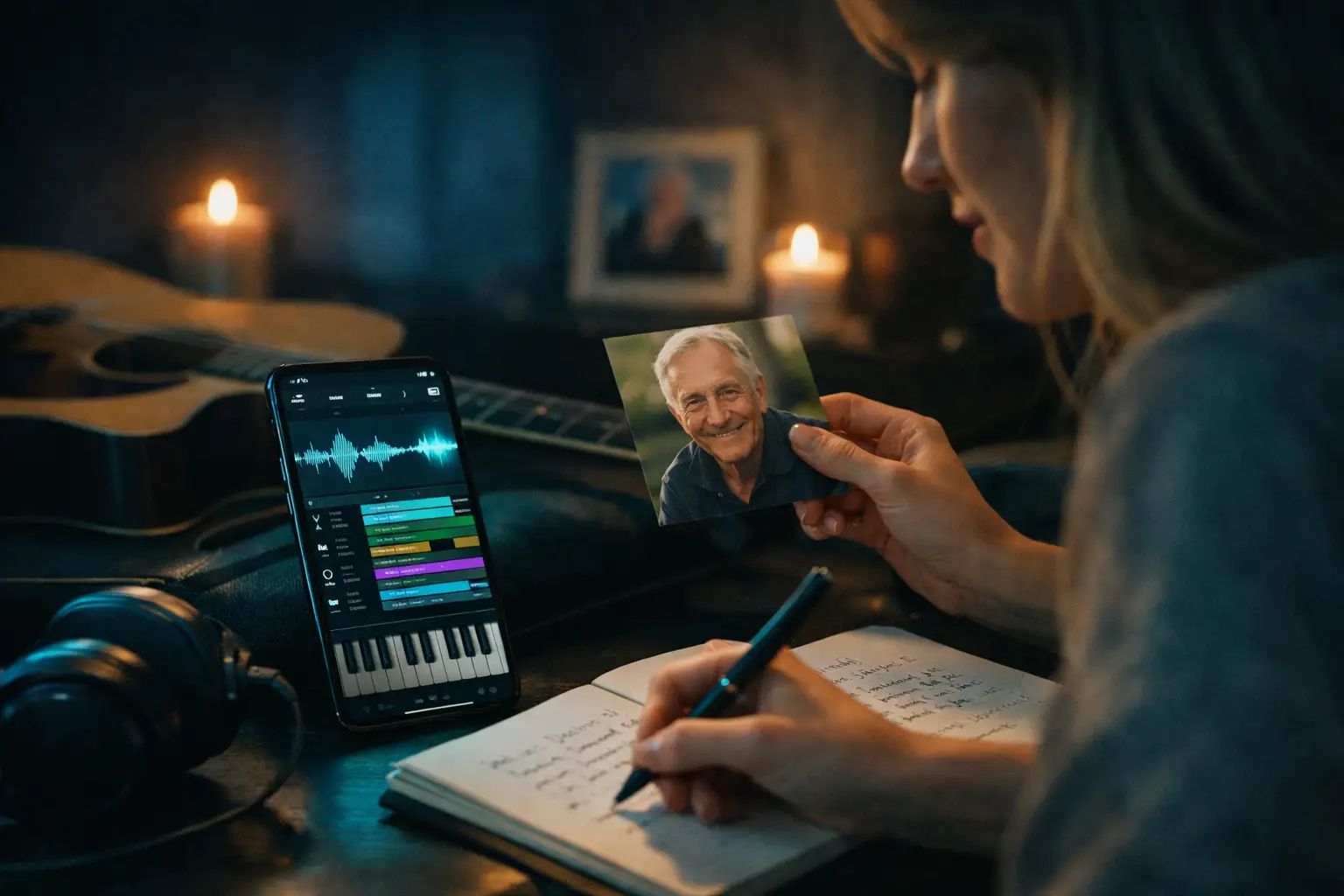
There are people whose name alone brings a flood of images back to mind: a lively kitchen, a car ride, a phrase they used to repeat, a particular way of laughing. A personalized tribute song gives you a place to gather those fragments and turn them into something you can listen to, give, and keep. It is not simply a song about someone. It is a gesture that says, “I remember you, and I remember what connects us.”
It can celebrate a life, thank a parent, honor someone who has passed away, mark a grandparents’ wedding anniversary, or pay tribute to a friendship that has lasted for years. And you do not need to know how to sing, play an instrument, or write like a lyricist to begin. What matters is what you want to express.
Why a song can touch people differently from a simple message
A written message can be beautiful. A photograph can bring a memory back in a second. But music adds time, rhythm, and emotional color to what you want to say. It gives the words room to breathe. It also lets the listener return to the same memory again and again without the message losing its impact.
A tribute song does not have to tell the story of an entire life. Trying to say everything is often the quickest way to dilute what matters most. One precise detail can be far more moving: the old jacket always worn on Sundays, the evening phone calls, holidays by the sea, or a family expression no one else would understand.
A tribute becomes personal when it comes from your own point of view. Two people can write about the same grandfather and create two completely different songs. One might remember his gardener’s hands, while the other recalls his habit of telling the same jokes over and over. Both can feel true because both come from genuine memories.
Finding the right angle for a personalized tribute song
Before thinking about musical style, ask yourself one simple question: what feeling do you want to leave behind when the song ends? The answer will guide the words, the rhythm, and the overall mood.
For a birthday or retirement, you may want something bright, energetic, and full of affectionate references. To honor the memory of someone you loved, a soft and peaceful melody may feel more appropriate. In some situations, especially after a recent loss, restraint can be more moving than overly grand lyrics. There is no universal tone: it depends on the person, your relationship, and the moment when the song will be heard.
You can start with a single intention: to say thank you, make someone smile, pass on a family story, ask for forgiveness, or remind someone how much they matter. Write that intention in one sentence. For example: “I want Mum to hear everything she taught us without ever having to say it out loud,” or “I want my best friend to remember our student years with a smile.” That sentence becomes your guiding thread.
Gather memories that feel real
Do not start by searching for beautiful rhymes. Begin by writing down whatever comes to mind. Concrete details give lyrics texture and keep them from sounding like words that could be addressed to anyone.
Think about shared places, routines, nicknames, meals, trips, objects, favorite songs, and phrases that person often used. Add what they changed in you as well. Perhaps they taught you to slow down, to laugh after a setback, to be brave enough to leave, or to keep bringing people together despite the distance.
If you are preparing the song with other people, ask each person to share a memory in a few lines or a voice message. A sister may remember a childhood story, a colleague may describe an act of kindness, and a grandchild may contribute an unexpectedly honest sentence. You do not have to keep everything, but these different voices can help build a more vivid portrait.
Give your lyrics a simple structure
A song does not need to be complicated to stay in someone’s memory. A clear structure gives emotion room to unfold: a few verses to tell the story, a chorus to repeat what matters most, and perhaps a more intimate section before the final chorus.
The chorus carries the line you want to remain in the listener’s heart. It can include a first name, a nickname, or one strong idea. Instead of writing “You are an amazing person,” show what makes that true: “You left light in our homes,” or “When you laugh, we find our way back.” Simple images are often the strongest when they come from something real.
Pay attention to length too. Too many memories packed into one verse can make the song difficult to follow. Choose three or four strong images, then let the music create the links between them. A tribute song is not a biography. It is a letter set to music.
If the emotion is delicate, avoid forcing dramatic declarations. Some relationships are better expressed through gestures than grand confessions. Saying “Your place is still by the window” can sometimes convey more than several lines about missing someone. The power comes not from the intensity of the words, but from their truth.
Choose a musical mood that supports the message
The style should not overshadow the story. It should support it. An acoustic ballad often suits a tender or nostalgic tribute. Gentle pop can give momentum to a message of gratitude. Soul, folk, or piano-and-vocal arrangements can bring warmth to intimate lyrics. For a family celebration, a more danceable rhythm may be exactly right, especially if the person being celebrated loved bringing everyone together.
Picture the moment when the song will be heard. Will it play during dinner, alongside a photo montage, through headphones as a gift, or with everyone gathered after a speech? A highly rhythmic track can work beautifully for a birthday surprise, but may feel less suitable for a reflective tribute. Again, there is no wrong choice, only a need for consistency between the intention and the setting.
The voice matters too. A gentle performance can create a feeling of closeness. A fuller voice can carry a collective declaration. If you want the gift to feel even more personal, hearing those words performed with your own voice can instantly turn the song into a memory. The key is to choose a vocal presence that matches what you want to give: tenderness, joy, peace, or strength.
Create without getting blocked by the technical side
Many people give up before they even begin because they assume making a song requires equipment, musical vocabulary, and years of experience. In reality, your starting point can fit into a few sentences: who the tribute is for, what you want to say, three memories, and the mood you are looking for.
With DeepZik, those elements can become an original piece of music even if you have never composed before. You stay in control of the lyrics, style, and overall emotion without getting lost in complicated settings. The tool does not replace your story; it helps give that story a form you can share.
Take time to listen to a first version with one question in mind: could this song be about anyone? If the answer is yes, add one more distinctive detail. If you immediately recognize the person in it, you are on the right track. Adjust a word, a memory, or the mood. Often, one small change makes the whole song feel much closer to what you meant.
Give the song at the right moment
The moment when you share it becomes part of the gift. You can play it during a family meal, pair it with a photo montage, send it first thing on someone’s birthday, or save it for a quiet moment together. For a collective tribute, leave a few seconds of silence before and after the music. Give everyone time to take in what they have just heard.
You can also create a song just for yourself. It can help you say goodbye, thank someone who is no longer here, or preserve a period of your life before it feels far away. In that case, you do not need a special date or an audience. The act of creating can already make space for what you are feeling.
Do not wait until you have found the perfect words. Start with a name, a memory, and one honest sentence. The music can then keep a door open to what truly matters.