
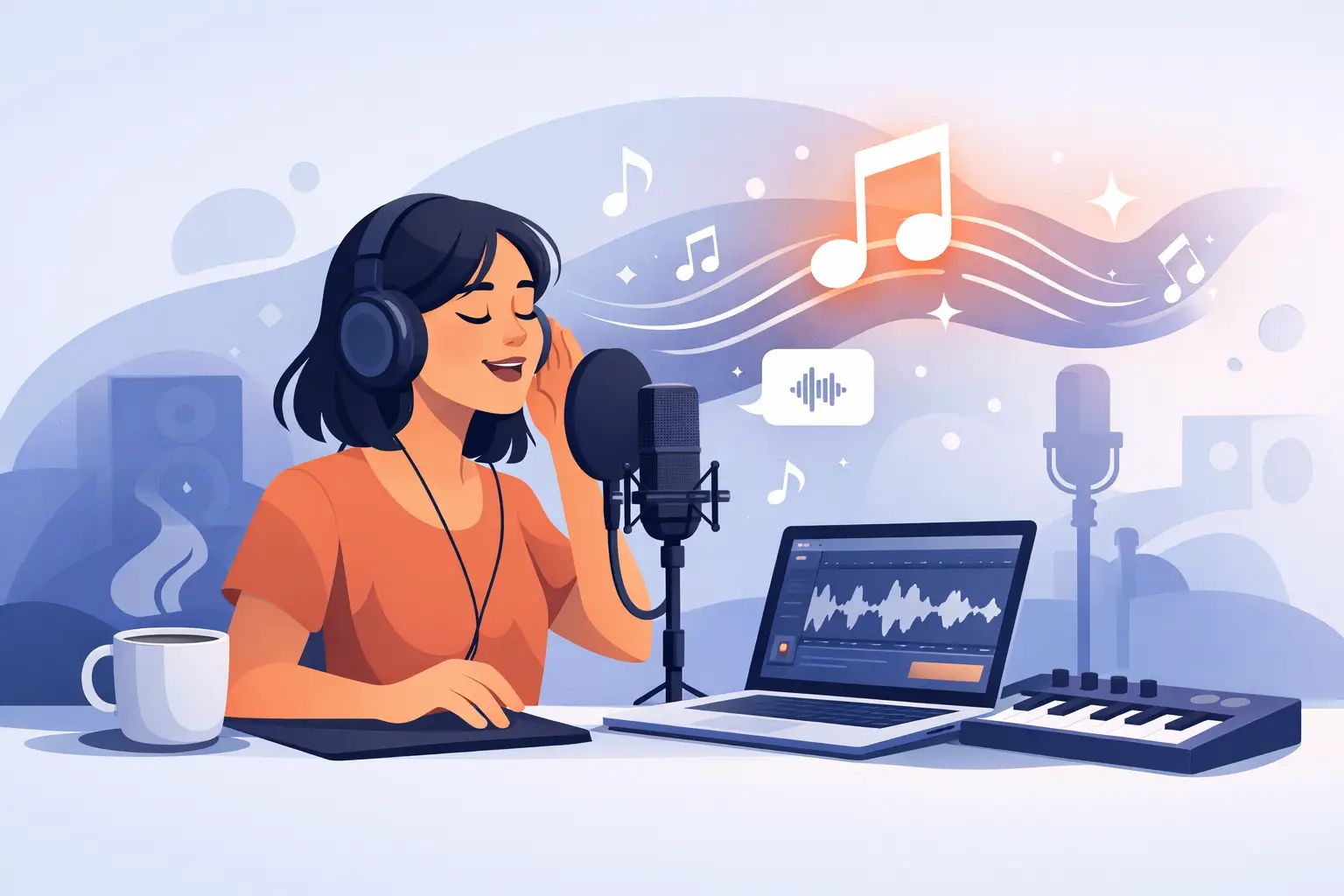
You have just recorded a voice message after an important day, told a story that makes your whole family laugh, or finally found the words you never dared to say to someone. That moment can become much more than a note on your phone. Creating a song with your own voice means giving what you feel a rhythm, a color, and a lasting place.
You do not need to play piano, write sheet music, or sing like a stage performer to create personal music. Your voice, your idea, and your memory are already a starting point. The rest is about choosing the emotion you want people to hear and giving it room.
Why your voice can make a difference
A song is more than a melody. It is also an intention. A voice carries details that text alone cannot always express: a smile, a hesitation, energy, tenderness, or a burst of laughter. Even a few seconds can give a creation an intensely personal dimension.
You do not need to deliver a perfect performance. In fact, a natural voice can make a track feel more sincere. For a birthday, a declaration, a holiday memory, or a message to someone you care about, that sincerity often matters more than a heavily polished recording.
Your voice can also play several roles. It can inspire the mood of a track, carry an important line, become the foundation of a chorus, or simply guide the song’s overall emotion. The right choice depends on what you want to keep at the center: your story, your words, or your presence.
Creating a song with your voice starts with an emotion
Before recording anything, ask yourself one simple question: what should this song make someone feel? You do not need a big concept. “I want to thank my sister,” “I want to relive that summer,” “I want to make my partner smile,” or “I want to motivate myself before a new beginning” are already strong directions.
A clear emotion makes the next decisions easier. A gentle story may work well with a warm ballad. A memory with friends might call for bright, sunny pop. To celebrate an achievement, a more rhythmic and confident track may express your pride more naturally.
Do not try to tell your whole life in one song. Choose one precise scene. The drive to the sea, your first meeting, the phrase your grandmother always repeated, the night you realized everything was about to change. The more concrete the moment, the easier it becomes to turn it into music that connects.
Find the words without trying to “write like a songwriter”
Start by speaking the way you normally would. Write down a few simple sentences: what happened, who you are thinking about, one detail you do not want to forget, and what you would like to say to that person today. Those fragments are more than enough to build a foundation.
The most memorable lyrics are not necessarily complicated. One true line, repeated at the right moment, can become a chorus. For example, “we made it through together,” “keep that light with you,” or “that was our summer” already tells a story. Your vocabulary is the right one because it belongs to your life.
Record a voice that sounds like you
When you record, choose a quiet place and keep your phone close without pressing it against your mouth. Speak or sing at a comfortable volume. If you whisper, the result will feel intimate; if you project more, it will feel livelier. There is no single correct way to do it, only a way that matches the emotion you chose.
Let small imperfections remain. A breath, a quiet laugh, or a slightly trembling voice can strengthen the authenticity of a sentimental track. On the other hand, if outside noise covers your words or you are interrupted, simply record another take. A few attempts are normal and often help you find the version that feels most like you.
If singing makes you nervous, start by speaking. Tell the memory, read your sentences, or record a spontaneous message. Spoken voice already has rhythm and personality. It can become creative material without asking you to hold a perfect note.
Choose the musical world for your story
The same voice will tell a different story over acoustic guitar, bright pop production, or a soft R&B atmosphere. Describing the style you imagine helps give the song a clear direction. Think about energy, tempo, and instruments rather than technical terminology.
You might ask for a slow, comforting song, a big joyful chorus, a soft nighttime atmosphere, or a danceable track for a memory video. Then add details that create an image: warm guitars, delicate piano, light percussion, or a hopeful build.
It also helps to accept that an idea can evolve. A very intimate story may become more powerful with minimalist music, but it could also turn into a pop anthem if you want to share it with friends. Test the option that makes you most eager to press play. The right version is not the most sophisticated one; it is the one that makes you recognize your intention in the first few seconds.
Give the song a shape
Even a short track can tell a real story. The beginning sets the scene, the chorus expresses the central idea or emotion, and the ending leaves something behind. You do not need to think in formal musical terms. Simply imagine what you would say first, what you would want to repeat, and the final sentence you would like to leave with the listener.
The chorus deserves particular attention. It is the moment people remember, sing back, or send to someone with a simple “listen to this.” Keep it direct. If the song is for a specific person, you can include their first name, a nickname, or a reference only the two of you understand. That small detail can turn a beautiful track into a gift that could not be mistaken for anyone else’s.
With DeepZik, a written idea, a memory, and a short voice sample can take the form of a song ready to listen to and share. The goal is not to place you inside an imaginary recording studio. It is to keep your story at the center of the creation.
Share without losing what makes the song personal
A song created from your voice can stay a private memory, be sent to one person, or become a post that brings people together. Before sharing it, ask yourself what you are comfortable revealing. A very personal creation does not have to be public to have value.
If you use another person’s voice, first name, or words, always ask for their permission before publishing. This is especially important with children, family messages, and spontaneous recordings. Respect is part of what makes the experience meaningful: everyone should be able to recognize themselves in a song and feel comfortable being included.
For social media, accompany the track with one sentence that gives context without explaining everything. “I turned our memory into a song” can be enough. Leave listeners room to feel something of their own too. The most moving songs often begin with something deeply personal and end up feeling universal.
When the idea feels too simple, keep it
Many beautiful songs begin with almost nothing: a message sent too late, a photo you found again, a joke between friends, or the desire to say thank you. Do not wait for a perfect occasion or perfect words. Record what feels true now, even if it lasts only twenty seconds.
Your voice does not need to prove anything. It can be fragile, joyful, calm, funny, or imperfect. It already carries a story no one else can tell in exactly the same way. Give it a melody, and you may have created a memory people will not forget.