
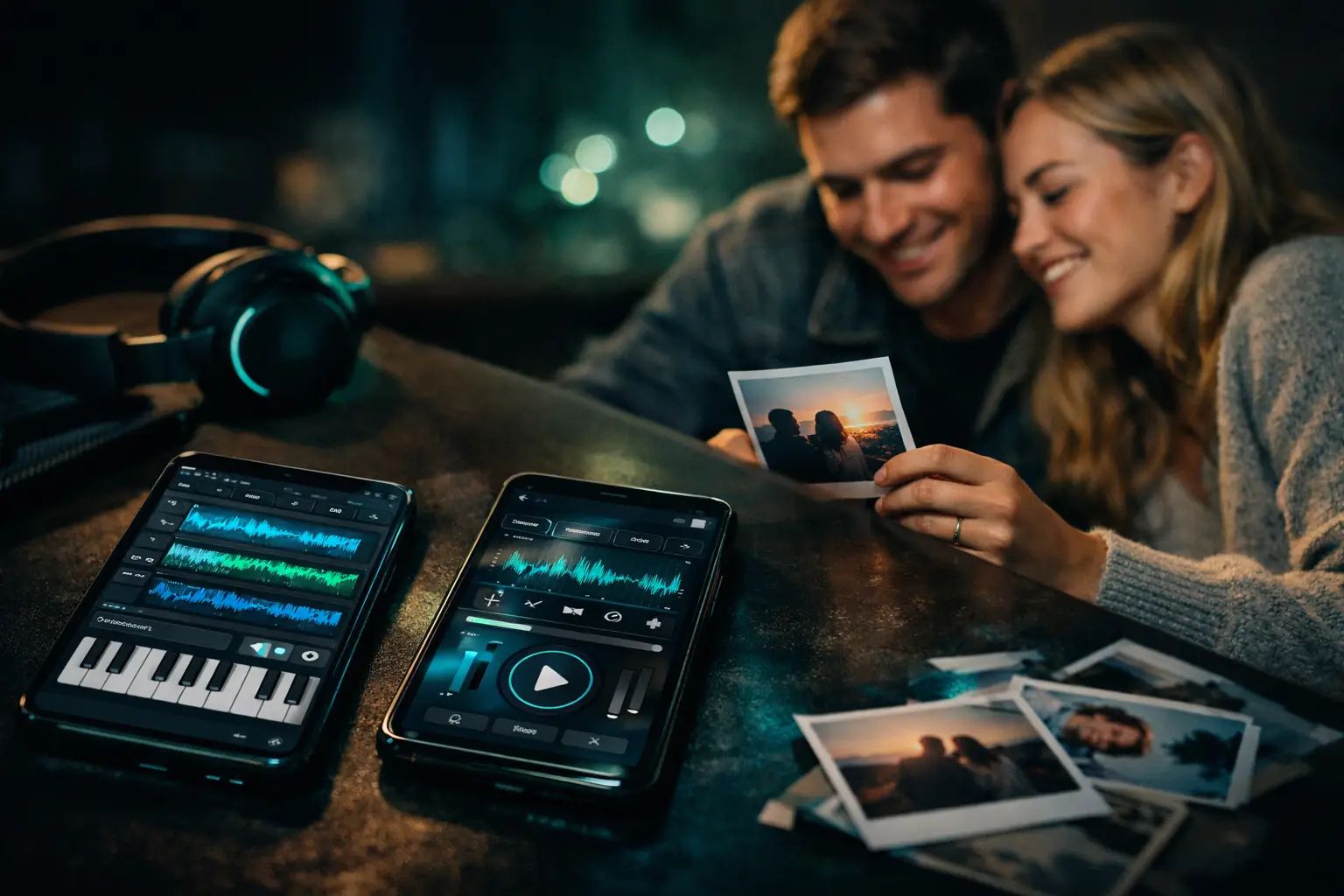
A birthday video can look beautiful. With the right images, it can even make someone smile. But add a song that mentions the person’s name, a family joke, or that holiday memory no one has forgotten, and it becomes something else: a message people keep. AI music for social media can turn an intimate idea into content that does not feel like anyone else’s.
You do not need to play piano, write sheet music, or own a studio to create. Often, all you need is one true starting point: a few words, an emotion, a voice, or an important date. Music then gives rhythm to your story and helps people feel it within a few seconds.
Why AI music changes social media
On social platforms, content moves fast. A perfect photo can disappear into the feed, while a melody tied to a personal sentence can stay in someone’s mind. The goal is not to find the loudest track or chase the trend of the moment. It is to create an emotion people can recognize.
A personalized song can accompany a wedding montage, a message for a friend who is moving away, a child’s first steps, a before-and-after travel video, or a declaration of love. It can also give recurring content its own signature: the launch of a project, behind-the-scenes moments from a small business, a series of memories, or a video where you finally say what you are feeling.
The advantage is simple: instead of spending a long time searching for music that more or less fits, you begin with what you truly want to say. A gentle mood for a family video, a bright chorus for good news, a funny track for a surprise between friends. The music adapts to the moment, not the other way around.
Start with the story, not the format
Before thinking about the length of your reel or the first image in the video, ask one question: what feeling do you want to leave behind? The answer will naturally guide the words, style, and rhythm.
For a birthday, you might begin with: “You have made Sundays happier for twenty years.” For a couple: “Our first rain in Lisbon became our song.” For a friend: “You are moving far away, but you still know every one of my sentences by heart.” These are not perfect lyrics yet. They are something better: raw material that belongs to you.
Then choose two or three precise details. A nickname, a place, a date, a habit, or an expression you often say to each other. These are the details that turn a song into a memory. “I love you” is universal. “I’ve loved you since our Tuesday coffee by the station” could only belong to your story.
Create a song designed to be shared
Social media favors short formats, but a short story does not have to be superficial. A song of 20 to 40 seconds can be enough if it reaches the heart of the message quickly. Put a strong line in the opening seconds, then let the chorus carry the emotion.
When you describe what you want to create, be specific about the intention. Instead of simply asking for a pop song, try: “Soft, sunny pop for my sister’s 30th birthday, with a chorus about how she turns small moments into big celebrations.” That gives the creation a more personal and recognizable direction.
Style matters, but it should serve your story. A piano-and-vocal ballad suits slower, close-up images such as family photos or a romantic message. A danceable track can bring momentum to a surprise, a travel video, or joyful news. For a funny anecdote, a light song with a very simple chorus will often work better than a track overloaded with details.
With DeepZik, an idea or a message, or even your own voice, can become an original song shaped around the mood you want. The goal is not to manufacture content on an assembly line. It is to give musical form to something you may not otherwise have known how to express.
Let the video frame the song, not distract from it
A personal song does not require a complicated edit. A few coherent images are enough: photos in the order of a memory, a short shot of the person being celebrated, details from a place, or one sentence on screen. If the lyrics mention a drive, show the road. If they refer to a specific summer, choose an image that carries its light.
Avoid trying to explain everything visually. Leave room for imagination and for the music. A video packed with text, transitions, and clips can weaken the simplicity of the message. Three strong images are often better than an edit that gives the chorus no room to breathe.
Also think about people who watch without sound. Add a few subtitles or display the most important lyric lines, especially at the beginning. That lets viewers understand the intention immediately and naturally invites them to turn the sound on. Your first line can be very simple: “I wrote this song for my dad.” That kind of honesty is often more moving than a sophisticated hook.
Find the right balance between intimate and public
Sharing a song born from a memory can be a beautiful gesture, but not everything needs to be public. You can create a complete version for the person concerned, then post a more discreet excerpt: the chorus, a few images, or a line that hints at the moment without revealing everything.
That balance depends on your story. A wedding or a birth may be shared joyfully, while an apology, grief, or a family confidence may call for a smaller circle. The strength of a creation is not measured by its number of views. It can also be measured by whether the right person hears it at the right moment.
If you use your own voice or someone else’s, always ask for permission before publishing. A voice is personal. That simple habit protects the trust that gives the song its value in the first place. Also check the terms of use of the tool you choose and the rules of the platform where you post, especially if the content is being used for a professional or commercial project.
Invite a response without forcing the emotion
The most shared posts are not always the ones that explicitly ask to be shared. A sincere story naturally invites a reaction. You can accompany your post with a simple question: “What song would you give someone today?” or “This chorus takes me back to our summer of 2018. Which memory would make you sing?”
For creators, this approach can become a recurring format. A series of songs inspired by follower messages, seasonal memories, or small everyday victories can create a deeper connection than using default background music. Just be careful not to turn emotion into a repetitive formula. Leave room for surprise, for people’s exact words, and for stories that genuinely move you.
Music does not need to be perfect to be memorable. It needs to feel right for you, for the person you are addressing, and for the moment it accompanies. Sometimes a few sincere lines and a chorus people can hum are enough to turn a post into a living memory.