
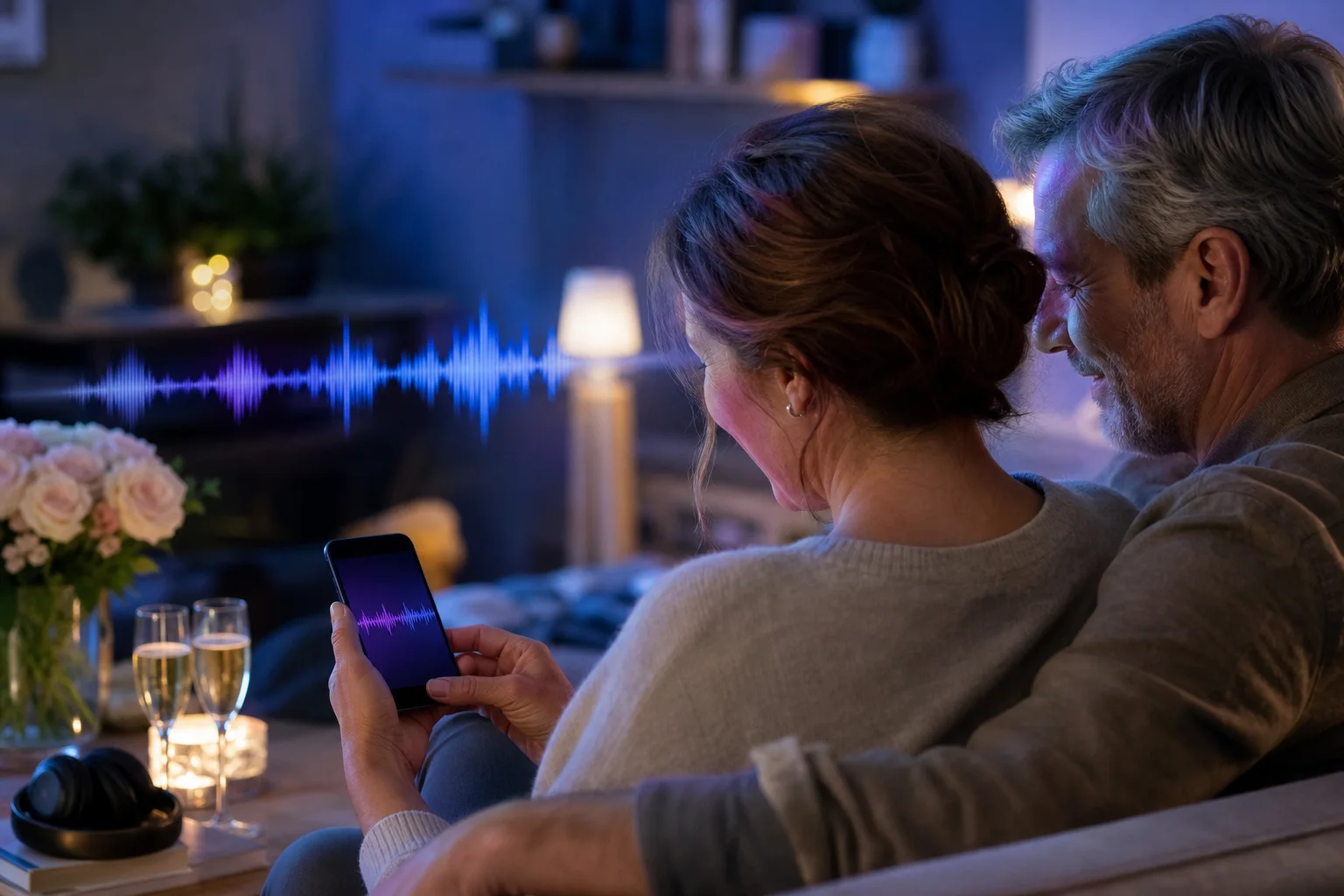
A wedding anniversary is more than a date on the calendar. It represents years of places, decisions, habits and memories that shaped one specific relationship.
A personalized song can compress that history without trying to mention every year. A few well-chosen scenes can make an entire life together recognizable. The goal is not to tell everything, but to choose the details that immediately make the listener think of your partner or the couple being celebrated.
Why a personalized song fits a wedding anniversary
A song can hold a name, a relationship, a message and specific memories in one gift. For a wedding anniversary, that matters because the years together already provide a timeline, but the song becomes moving when it also captures the small rituals that survived every stage.
The strongest results usually come from recognizable details rather than generic praise. A date, place, repeated phrase, small habit or funny moment can make the song unmistakably personal.
What to gather before you create the song
In practice, start with five to eight well-chosen details. A short prioritized list usually gives a clearer direction than an unfiltered biography.
- how the relationship began
- a place that matters to the couple
- a challenge they overcame together
- everyday rituals or habits
- a future plan or dream they still share
For this step, write them in your own words. If you already have text, creating music from a personal prompt can help turn it into a more focused musical brief.
Choose a tone that actually matches the person
At this point, style should support the story. Useful directions include romantic without becoming generic, nostalgic but hopeful, or elegant and celebratory for an anniversary dinner. The right choice depends more on the person and the moment than on whatever genre is currently popular.
In practice, avoid asking for too many conflicting moods at once. Pick one main emotional direction and add a secondary nuance only when it helps.
Build a story instead of listing memories
A song feels more natural when the details follow a thread. Verses can move the memories forward while the chorus carries the message that should remain after the song ends.
Example creative direction
For this step, open with the rainy first meeting, move to the home they renovated together and Sunday mornings with the same old record, then make the chorus a simple promise about the years still ahead.
For a broader method, turning an idea into a song explains why concrete memories are often more useful than a vague topic.
Common mistakes that make a custom song feel generic
- relying on generic romantic clichés
- ignoring the everyday details that make the relationship recognizable
- forcing names and dates into awkward rhymes
- staying entirely in the past instead of looking forward
The most common mistake is adding too much information just to prove the song is customized. Two or three strong recurring details can create more emotion than a rapid list of references.
Create the song in DeepZik
DeepZik lets you start from an idea, text or your own lyrics and turn that material into a complete song with lyrics, music and vocals. Describe the person, the relationship, the memories that matter and the emotion you want to leave behind. Some creations can also use a personalized voice.
A first version can be treated as a draft. Adjust the memory, chorus or mood that needs more focus instead of rewriting everything. The guide to creating a song that feels like you is a useful foundation.
Plan the moment when you will give it
At this point, reveal the song over dinner, during a family celebration or in a quiet private moment. If you are creating the song for another couple, ask a trusted relative to verify any sensitive memory before you use it.
A short note explaining why you made the song can add context without taking attention away from the music.
Revise the first version without losing its spontaneity
In practice, after the first listen, write down what you definitely want to keep: a line, mood, moment or feeling. Only then list the two or three things that need improvement. This keeps you from rebuilding a song when most of it already works.
If the song feels generic, do not add ten more facts. Replace one vague line with a lived detail. If it feels overloaded, do the opposite and remove a secondary idea so the chorus has room to breathe.
Before sharing, verify details and consent
For this step, check names, dates, places and stories. A wrong fact can break the surprise, while an overly private detail can make someone uncomfortable. Match the level of detail to the setting: private gift, family listening, event or public post.
Frequently asked questions
Do I need to write the lyrics myself?
You do not need ready-made lyrics. You can begin with memories, phrases or a description. Existing lyrics are useful but not required.
How many details should I include?
A small set of precise, memorable details is usually better than an exhaustive biography.
Can I include the person's name?
Yes. A name can make a chorus more personal when it is used naturally.
Should the song be emotional or funny?
At this point, choose one primary feeling first. Humor works best when it comes from a real story or familiar phrase.