
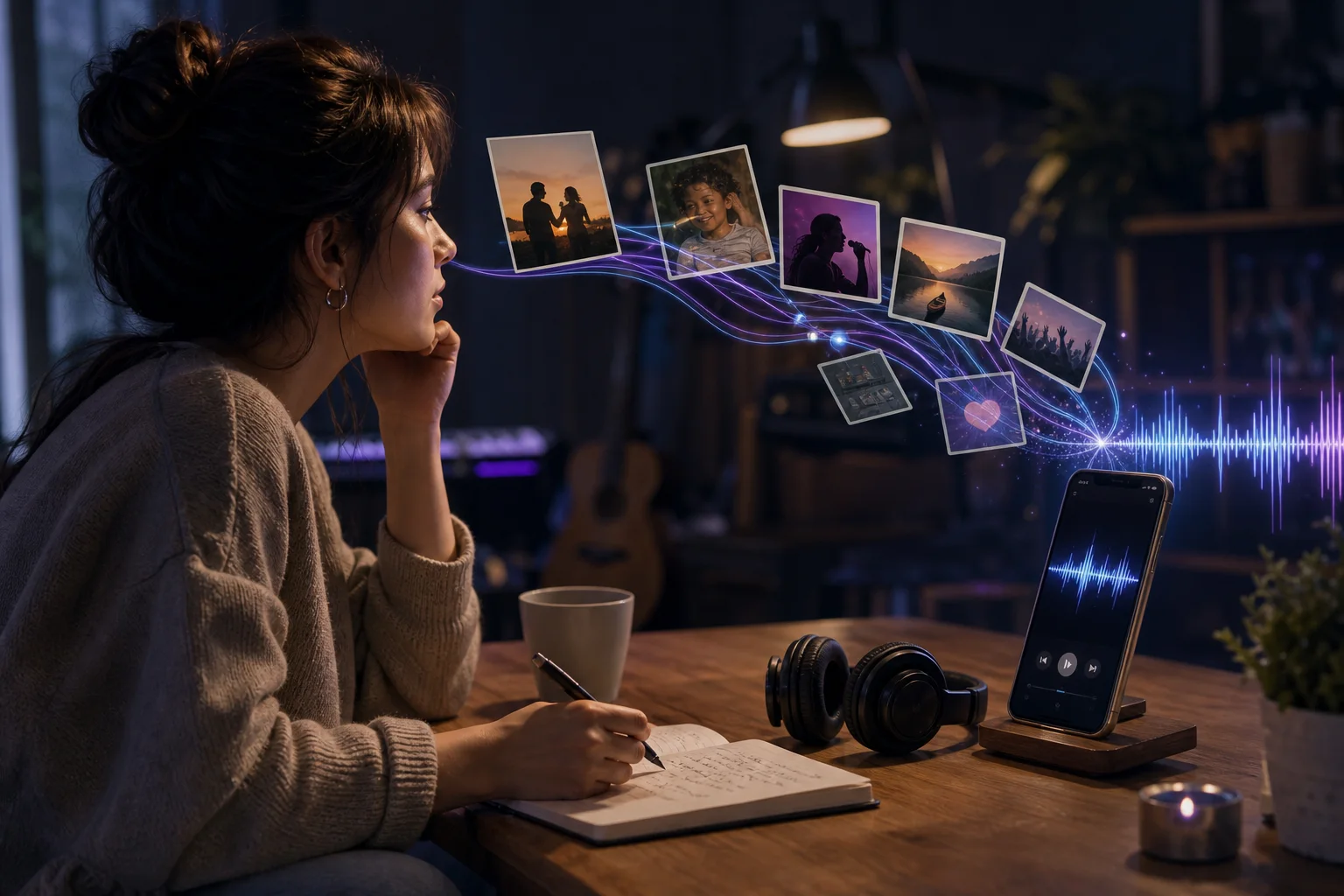
A useful personalized-song prompt is neither one vague sentence nor a three-page biography. It selects the information that truly needs to shape the song.
The quality of the brief comes mainly from hierarchy: who the song is for, what the occasion is, which memories matter and what emotion should lead.
Start with the person and purpose
In practice, first state who the song is for and why you are making it. That sentence should make sense without any additional explanation.
Add three to five recognizable details
For this step, choose memories, habits, places or phrases that make this story different from anyone else’s.
- one specific memory
- a habit or familiar phrase
- an important place
- a turning point
- a wish for what comes next
Choose one leading emotion
At this point, pick a main direction such as warm, joyful, nostalgic or energetic. Add one secondary nuance if useful, but avoid several conflicting moods.
Separate story from musical direction
The story describes what the song should say. Style describes how it should sound. Keeping them separate makes the brief easier to understand and refine.
Review the prompt before generating
In practice, remove details that should not appear in the lyrics and verify names, dates and facts. An AI system cannot know that a supplied detail is wrong or accidentally private.
Prepare a first version without overloading the brief
To start a creation, gather only the elements that can meaningfully change the result. One primary intention, a few specific details and a clear musical or visual direction are more useful than a prompt full of competing requests.
If you are torn between two strong directions, make separate variants. That gives you a real comparison instead of one vague compromise between incompatible ideas.
- define what the result should make someone feel;
- keep the names, facts or elements that must remain;
- remove private information that should not appear;
- separate what the creation should say from how it should sound or look;
- keep the original brief so you can change one variable at a time.
Improve the result after the first listen or preview
For this step, do not stop at whether you like the result. Identify the reason: is the message clear, does the mood fit, is one section overloaded, or does the voice, image or structure draw attention to the wrong place?
At this point, then change the most important variable first. Changing text, style, intensity and structure at the same time makes it difficult to learn what actually improved the creation.
What makes a result personal rather than generic
In practice, personalization rarely comes from providing the maximum amount of information. It comes from a few details nobody else would have supplied: a phrase, memory, rhythm, image or constraint that genuinely belongs to the project.
For this step, when reviewing your brief, ask whether another person could swap the names and end up with essentially the same story. If so, add one concrete detail and remove one generic statement.
Put the method into practice with DeepZik
In DeepZik, the Simple creation flow can start directly from an idea. If you want more control, prepare a short but specific brief and then adjust one element after the first listen.
At this point, go deeper on creating music from a prompt adds another useful angle to the process.
In practice, see how to turn an idea into a song adds another useful angle to the process.
A simple five-step workflow
- define the intended result in one sentence;
- prepare the best source available: text, voice, image or song depending on the task;
- add only constraints that can meaningfully change the output;
- generate a first version and listen or watch it all the way through;
- change one important variable and compare.
This can look slower than writing one very long prompt, but it often speeds up the process because you can see which instruction caused which effect. You keep the strong parts instead of losing them with every new attempt.
Check what you are comfortable sharing
When preparing to publish, make one final pass over personal information, imported files and the people shown or heard. You should use only content and voices for which you have the required rights or permission.
Frequently asked questions
Do I need to be a musician to use this method?
You do not need to be a musician. The most important part is knowing what you want to express or obtain and giving the creation process enough specific direction.
Does the first generation have to be perfect?
A first generation does not need to be perfect. A first version can reveal what works and what needs more direction. Change one important element at a time instead of rewriting everything.
Can I start from my own words?
Yes. Depending on the creation, you can begin with an idea, text or lyrics you already wrote.