
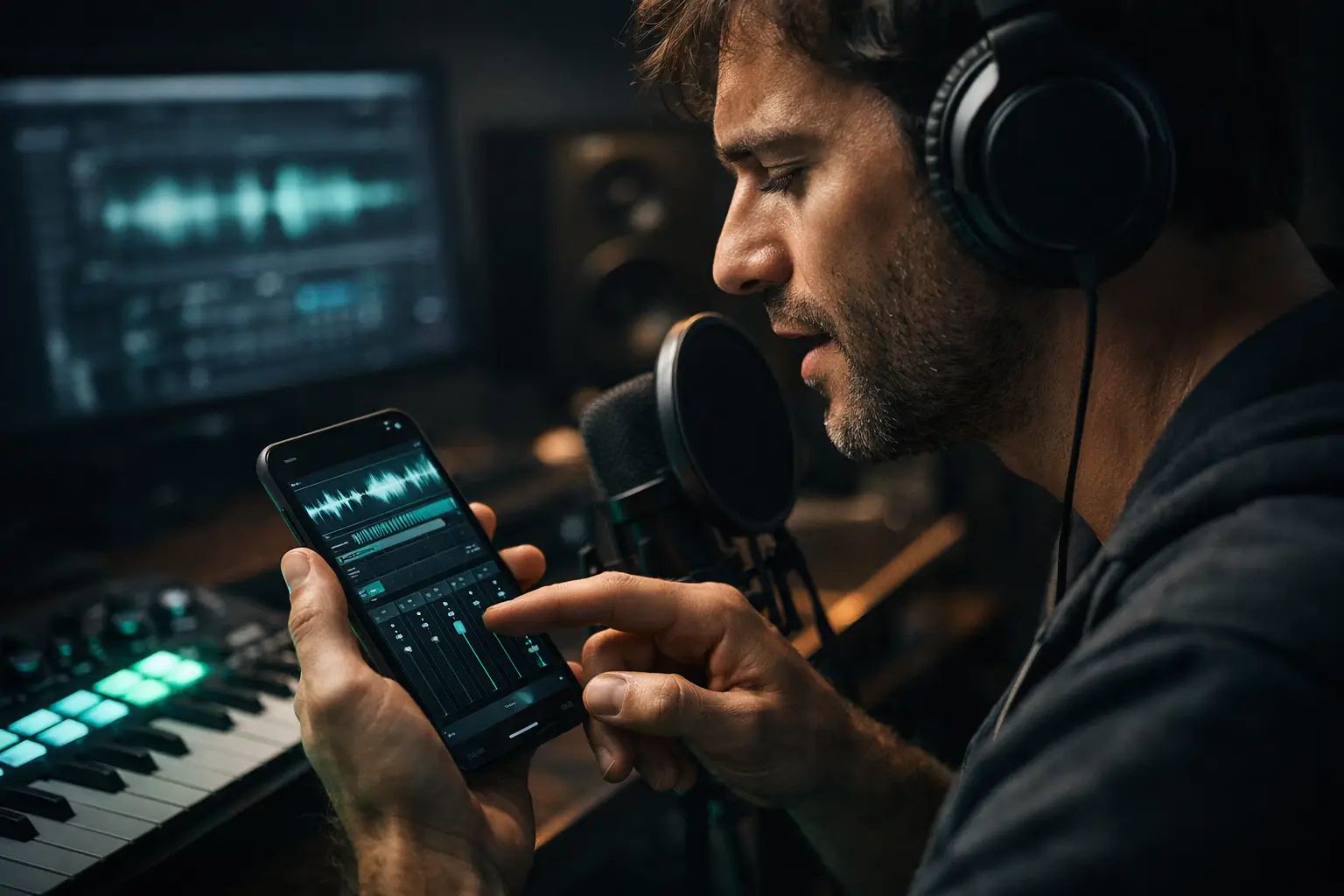
You may already have the words without feeling that you have the voice. A birthday is coming up, someone close is going through an important moment, or a memory comes back with a very specific emotion. Making a song when you do not know how to sing is not reserved for people who grew up with a microphone in their hand. It is first and foremost a way to give shape to something you want to say differently.
A personal song does not become moving because every note is perfect. It moves people because it tells something that belongs only to you: meeting in the rain, a phrase your child keeps repeating, a trip, a promise, or simply a thank-you that deserves more than a text message.
Why your singing voice is not the starting point
When people say “I can’t sing,” they often think about pitch, rhythm, or what others might think. But that hesitation usually hides another fear: not feeling entitled to create at all, as if music were a territory reserved for people who play an instrument or feel comfortable on stage.
But a song begins long before anyone sings. It begins with an intention. Do you want to make your best friend smile on their birthday? Tell your partner something you struggle to say face to face? Preserve the voice of a grandparent, or create a funny chorus for a family video? That intention is your raw material.
You do not need to know the chords or invent the melody yourself. Your role is more personal: choose the story, the details, and the atmosphere. Technique can support you. The emotion can only come from you.
Make a song without knowing how to sing: start from a real moment
The best shortcut to a song that feels right is to stop trying to write “like an artist.” Write the way you would speak to the person concerned. Begin with one concrete memory instead of a broad, abstract declaration.
Instead of saying “you are amazing,” think about what proves it. “You waited for me at the station with a cold coffee in your hand” says more. Instead of “our wedding was magical,” mention the song that played during the first dance, the shoes left under a table, or the laughter at the end of the night. Small details make a life recognizable. They give the song its truth.
Take a few minutes and write down three things: what you want to say, one precise memory, and the emotion you want to leave behind. For example: thank your sister, remember the summers at your grandparents’ home, and create a soft, bright feeling. You already have the heart of the track.
You do not need to tell everything. A two- or three-minute song is not a biography. It chooses one scene, one thread, one image. That constraint is useful: it gives the listener room to feel without drowning the message in explanations.
Find the words without chasing perfection
Many people stop before they even begin because they think they do not know how to write. Forget perfect rhymes at first. Start with a rough text, like a note on your phone or a letter you would never send.
You can answer a few simple questions: what has this person changed in your life? Which moment would you like to relive? What sentence do you say to them often? Which detail would make someone who knows you well smile? At this stage, repetition and imperfect sentences are welcome. They bring you closer to your natural voice.
Then keep the most vivid words. Songs love simple phrases that people can remember. A chorus can grow from one sincere idea repeated at the right moment: “I’ll be there,” “we always find our way back,” “this story is ours.” If rhymes come, great. If they do not, the message can still be powerful.
Be careful, though, not to make everything too intimate if you plan to share the song publicly. A first name, a city, or a private anecdote can be wonderful in a personal gift. For something you intend to publish, you can keep the emotion while removing details you would rather keep to yourself.
Choose a mood that already tells part of the story
Even without musical vocabulary, you know how to recognize a mood. You know whether you want something joyful, tender, nostalgic, danceable, or funny. That is more than enough to guide a creation.
Imagine the song as the soundtrack to a scene. For a quiet declaration of love, soft pop or an acoustic ballad may fit. For the 40th birthday of a friend who loves to laugh, an upbeat track with a chorus everyone can sing will have more impact. To tell a childhood memory, a warm and bright atmosphere can bring the images back before the lyrics have even fully settled in.
The right choice depends on the person and the moment. A very slow song can be deeply moving, but it may not be ideal for starting a party. Conversely, a festive track can create a collective memory without being the best setting for a delicate confession. Simply ask yourself: what do I want this person to feel in the first few seconds?
Use your voice, or choose another way to tell your story
Not knowing how to sing does not necessarily mean you have to disappear from the song. Your speaking voice can carry emotion too. A short recorded message, a dedication at the beginning, or a few words at the end can make a track incredibly moving precisely because they are real.
If that idea makes you uncomfortable, nothing forces you to put yourself forward. You can create a song from your words, your memories, and the mood you chose, then let the music carry the text. That can feel more comfortable, especially for a first attempt or a gift with a lot of emotion behind it.
The important thing is to choose what feels like you. Some people will want to hear their own voice so they can preserve it. Others will prefer to focus on the words. Neither approach is more authentic than the other. The right one is the one that lets you follow your idea through to the end.
Give your idea a form, then listen with your heart
Tools such as DeepZik can turn an intention, lyrics, and a musical mood into a song without requiring you to learn singing or complicated software. The point is not to manufacture an impersonal track in a few clicks. It is to help a story that may have been sitting quietly in your mind finally exist in music.
When you listen to the result, do not first ask whether it sounds like a song you would hear on the radio. Ask a more useful question: does it feel like what I wanted someone to feel? If the answer is almost yes, adjust a word, the atmosphere, or the tone of the chorus. A personal creation often comes together through small changes.
You can also play the song for someone you trust before giving it. Not to receive a score, but to check that the message comes through. If they smile at the detail you chose, recognize your story, or tell you “that is so you,” you are moving in the right direction.
The best gift does not need a perfect voice
A song created for someone can become more than a gift. It may accompany a drive, return during a difficult day, or come back every year on the same date. It keeps an emotion alive that words alone might have let slip away.
So do not let the thought “I can’t sing” make the decision for you. Start with one sentence, one memory, or one name. Music is not waiting for your perfection. It is waiting for what you want to share.